In the evolving landscape of data management, innovative database systems are essential for businesses and organizations seeking efficiency, scalability, and advanced analytical capabilities. Sruffer DB is one such database solution that has emerged as a versatile tool for handling complex data environments. Designed to optimize storage, retrieval, and processing, Sruffer DB is gaining attention for its performance-driven architecture and adaptability across various industries.
What Is Sruffer DB
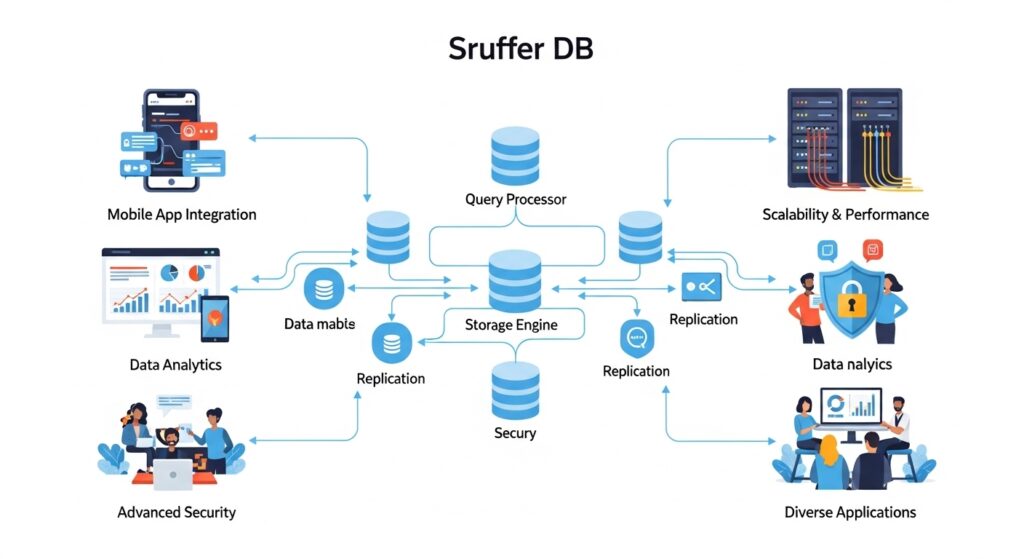
Sruffer DB is a database system designed to manage large volumes of data efficiently while providing fast access and robust analytics. Unlike traditional relational databases, Sruffer DB emphasizes scalability, flexibility, and performance optimization. It is suitable for both structured and semi-structured data, making it a versatile choice for modern applications.
Key aspects of Sruffer DB include:
-
High-speed data retrieval and processing
-
Support for diverse data types
-
Scalable architecture suitable for growing datasets
-
Security and data integrity features
Sruffer DB is aimed at organizations that require real-time data access, reliable storage, and analytical insights to make informed decisions.
Core Features of Sruffer DB
Sruffer DB incorporates several features that distinguish it from conventional database systems:
1. Scalability
The system can efficiently handle expanding datasets, allowing businesses to scale their operations without sacrificing performance.
2. High-Speed Data Access
Optimized indexing and storage mechanisms ensure rapid data retrieval, which is critical for time-sensitive applications.
3. Flexibility in Data Handling
Sruffer supports multiple data formats, including structured tables, semi-structured JSON data, and other complex formats.
4. Security and Reliability
Built-in encryption, user access controls, and monitoring systems protect sensitive data and ensure system integrity.
5. User-Friendly Management
Intuitive dashboards and query tools allow database administrators and non-technical users to manage and analyze data efficiently.
Advantages of Sruffer DB
Organizations adopting Sruffer can benefit from several key advantages:
Efficient Data Management
Sruffer reduces redundancy and organizes information effectively, allowing users to access relevant data quickly.
Enhanced Performance
Advanced algorithms and optimized storage structures improve query performance and system responsiveness.
Real-Time Insights
Fast access to large datasets enables businesses to make decisions based on real-time data analytics.
Cost-Effectiveness
Efficient data handling reduces storage costs and minimizes the need for extensive infrastructure investments.
Adaptability
Sruffer can be tailored to meet the needs of small businesses, large enterprises, or specialized industries.
Applications of Sruffer DB
Sruffer can be applied across a wide range of sectors:
1. Business Intelligence
Companies can use Sruffer to analyze customer behavior, track operational metrics, and generate actionable insights.
2. Healthcare
Healthcare providers can manage patient records, research data, and treatment histories efficiently and securely.
3. Finance
Financial institutions can track transactions, manage portfolios, and assess risk using Sruffer DB’s real-time capabilities.
4. Education
Schools and universities can organize academic data, track student performance, and manage research projects effectively.
5. Technology Development
Developers can integrate Sruffer DB into applications requiring fast data processing and reliable storage solutions.
Challenges and Considerations
While Sruffer offers many benefits, organizations should consider certain challenges:
Learning Curve
Implementing a new database system may require training for administrators and users.
Integration with Existing Systems
Ensuring compatibility with existing software and workflows is critical for seamless adoption.
Maintenance Requirements
Regular backups, updates, and monitoring are necessary to maintain optimal performance and security.
Infrastructure Needs
High-performance systems may require robust hardware or cloud infrastructure to operate efficiently.
Best Practices for Using Sruffer DB
To maximize the benefits of Sruffer, organizations should follow these best practices:
-
Establish Data Governance: Define clear policies for data entry, access, and usage.
-
Regular Backups: Implement frequent backup routines to prevent data loss.
-
Monitor Performance: Continuously track query efficiency and system health.
-
Plan for Scalability: Anticipate future growth to ensure consistent performance.
-
Train Users: Provide comprehensive training to staff for efficient use and management.
Future Potential of Sruffer DB
As data volumes continue to increase, Sruffer DB is expected to evolve in several ways:
-
AI Integration: Using machine learning for predictive analytics and automated optimization.
-
Cloud Adoption: Enhanced cloud-based deployment for remote accessibility and scalability.
-
Real-Time Analytics: Improved support for instantaneous decision-making and dynamic data visualization.
-
Security Enhancements: Advanced encryption and monitoring to protect against evolving cyber threats.
The continued development of Sruffer aligns with trends in big data, cloud computing, and intelligent data management systems.
Conclusion
Sruffer DB is a modern database system designed for efficiency, scalability, and flexibility. Its ability to handle large datasets, support multiple data types, and provide real-time insights makes it a powerful tool for organizations across industries.
By implementing Sruffer effectively, businesses can streamline data management, enhance performance, and support informed decision-making. As digital transformation accelerates, database systems like Sruffer will play a pivotal role in managing complex information landscapes and driving innovation.